Incredible discovery on route of bypass near Nis: Construction works uncover what lies under fields in Malca


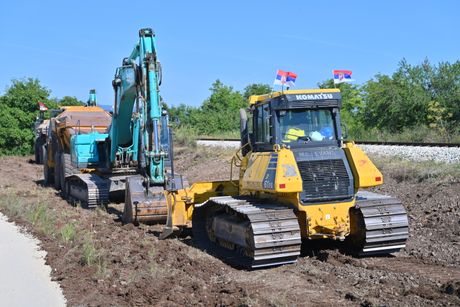
During protective archaeological excavations on the route of a railway bypass around the city of Nis, a part of a settlement and graves belonging to the Starcevo culture were discovered at the Novosel archaeological site, the age of which is preliminarily determined to be 8,000 years old, the Institute for Protection of Monuments in Nis has announced.
Recommended

"PREPOZNAO SAM NJENE PATIKE": Potresne reči oca nestale Marije: "Šest godina smo živeli u nadi, a sad..."
Poznato kada Novak Đoković kreće u pohod na novi Masters, idealan termin za Noleta protiv nezgodnog protivnika
They added that these graves represent the oldest material evidence of burials in the area of Nis.
If the bypass was not being built, no one would have ever found out that there was a settlement in the early copper age under the fields in the village of Malca. At the end of last year, the site of Ornicje near Malca was investigated and a Roman grave was discovered there in the central part of a prehistoric rondel, a system of trenches and palisades.
Research started in February at a more recent settlement at Novosel, and great discoveries are already being made there.
Previous archaeological research established that the Novosel archaeological site is multi-layered and that it represents a settlement not only from the Eneolithic period (which is chronologically connected to the rondel at the Ornicje site), but also a settlement with graves from the Middle Neolithic (Starcevo culture) era, as well as that there are items from the ancient period - according to the Institute for Protection of Monuments in Nis.
They explain that the Starcevo culture represents a cultural group that developed in the area of the central Balkans and Lower Pannonia, which precedes the Vinca culture and belongs to the middle, or older, Neolithic period.
The Starcevo graves discovered and investigated at the Novosel site represent the southernmost graves of the Starcevo culture discovered so far. The Starcevo graves at the Novosel site are the oldest material evidence of burials having taken place in the Nis area - the Institute points out.
They note that together with the discovery of a rondel from the Eneolithic period at Ornicje, the Eneolithic settlement at Novosel (Salkuca-Cernavoda III) and now the Starcevo settlement with graves - protective archaeological excavations on the route of the railway bypass represent one of the most significant protective archaeological excavations in Nis in recent years.
Archaeological discoveries on the route of the bypass confirm that the area of Nis and its surroundings has been continuously inhabited for at least 8,000 years, over different archaeological and historical periods - the Institute stated.
As archaeologist Aleksandar Aleksic explained earlier, after the excavation, all archaeological material gets removed, so that construction can proceed without destroying archaeological heritage.
(Telegraf.rs/Juzne Vesti)
news_in_focus
Uroš nacrtao Edina Džeka koji se krsti kao pravoslavac: Objava mališana ujedinila je ceo region
"Uz njegovu pesmu sam se probudio iz kome": Ivica Dačić objavio slike sa Halidovog groba na godišnjicu smrti
One su ubedljivo nešto NAJGORE U SRBIJI! Samu došao iz Barselone u Beograd, imao ružno iskustvo sa ovim ženama
Najdugovečniji Grci dan počinju ovim čajem: Piju ga zbog varenja, ali i boljeg pamćenja
Novak Đoković deo istorije u Pekingu, ovo se do sada nikada nije desilo ni na jednom ATP turniru
Video: Na mestu gde je poginuo pas Džeki komšije ostavljaju cveće
Telegraf.rs zadržava sva prava nad sadržajem. Za preuzimanje sadržaja pogledajte uputstva na stranici Uslovi korišćenja.
Comments
Web stories

MRAČNI LANAC ČUVAO TAJNU SMRTI MARIJE (29)! Sve je prekinuto jednim pismom: Bivši dečko priznao drugu, šest godina kasnije usledio ŠOKANTAN PREOKRET!
NAPAD NA ZEMLJU U SRPSKOM KOMŠILUKU Poleteli dronovi, sazvana HITNA sednica saveta za nacionalnu bezbednost, oglasio se i Zelenski
UPOZORENJE NAJVIŠEG STEPENA STIGLO SVIM AMERIKANCIMA! "Odmah napustite Rusiju! Ne možemo da vam pomognemo!"
