Last wish of Theodor Herzl fulfilled: Grave of his ancestors in Belgrade hid an unexpected secret


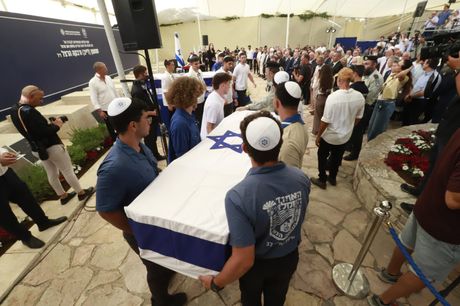
The remains of the grandparents of Theodor Herzl were buried in Jerusalem on Wednesday, to where they were transported from Zemun, a municipality of Belgrade. The state ceremony was attended by Israeli officials and marked the completkion of a chapter in the family history of the founder of modern political Zionism, writes TPS-IL.
Recommended

Posle jednokratne pomoći, penzionerima stiže nova uplata pre decembarskog povećanja: Evo i kada
NASLOVNE STRANE DANAŠNJIH NOVINA: Prelistavanje štampe za ponedeljak, 21. septembar 2026. godine
Rabbi Shimon Leib Herzl and his wife, Rivka, were laid to rest on Mount Herzl alongside their grandson 77 years after Herzl's own reburial in Israel in 1949, according to the Hebrew calendar. The ceremony was attended by President Isaac Herzog, Prime Minister Benjamin Netanyahu, senior government officials, members of the Herzl family, and representatives of the World Zionist Organization (WZO), which was founded by Herzl.
The couple's remains were exhumed last week from the Jewish cemetery in Zemun, a historic district of Belgrade, after several years of diplomatic, legal and religious coordination between Israeli and Serbian authorities. During the exhumation, officials discovered that Shimon Leib Herzl was not buried beneath the tombstone bearing his name. After widening the excavation, they found his remains beside his wife’s grave.
Before the burial in Jerusalem, the two coffins were briefly covered with the same ceremonial cloth used during Theodor Herzl’s reburial in 1949.
Herzl, an Austro-Hungarian journalist born in Budapest in 1860, convened the First Zionist Congress in Basel, Switzerland, in 1897 and transformed the emerging idea of Jewish national self-determination into an organized political movement. After his death in Vienna in 1904, he was buried there until his remains were transferred to Jerusalem a year after Israel’s establishment. His parents and sister were also reburied on Mount Herzl, while additional family members were brought to Israel in 2006 and 2007.
Israeli officials said Wednesday’s ceremony fulfilled what they described as the final unresolved element of Herzl’s wish that his close family eventually be buried in the Jewish homeland once such a state existed.
Addressing the ceremony, Herzog focused on the role of Herzl’s grandparents in shaping the intellectual and spiritual environment that influenced the future Zionist leader.
"Dreams are not inherited in writing," Herzog said. "They are passed down at the Shabbat table."
The president highlighted Shimon Leib Herzl's role as the gabbai, a synagogue official who assists with religious services, at the Sephardic synagogue in Zemun, where Rabbi Yehuda Alkalai served as rabbi. Alkalai, a Serbian rabbi born in Sarajevo, is regarded by many historians as one of the earliest advocates of Jewish national restoration decades before political Zionism emerged.
Herzog argued that while Shimon Leib was not a public leader, he carried Alkalai's ideas into his home, where they became part of the family tradition.
"Not every person gets to envision a state," Herzog said. "But every person can be the one who carries the vision home and places it on the table of their home."
Historians have debated the extent of Alkalai’' direct influence on Theodor Herzl. Although no definitive evidence links the two men's ideas, many scholars view Alkalai as an important intellectual precursor of political Zionism.
Netanyahu described Herzl as "the modern Moses," saying he often points to Herzl’s statue when hosting visiting foreign leaders.
"When world leaders come for diplomatic meetings, I usually pause with them by Herzl’s statue," Netanyahu said. "Herzl created the conditions that brought us to the Promised Land."
Turning to Herzl’s grandparents, Netanyahu added, "Herzl’s grandparents provided the roots that grew the trunk, branches and fruits. Herzl instilled in us the belief that we must take our fate into our own hands."
Both Netanyahu and Herzog also connected Herzl’s legacy to Israel’s current challenges, emphasizing the importance of leadership and national unity. Herzog urged Israelis to avoid deepening political divisions as the country approaches elections, saying, "Elections are not a civil war."
The reburial marked the completion of the transfer of most of Herzl’s immediate family to Mount Herzl, although one of his children remains without a known grave. His youngest daughter, Trude, died in the Theresienstadt concentration camp in 1943, and her remains were never recovered.
(Telegraf.rs)
news_in_focus
Spremite se, pomeramo sat: Evo kog datuma vraćamo kazaljke i dobijamo sat vremena više
Cela Srbija brujala o njenom intimnom snimku: Ona bila posramljena, a sada pokazala muža, žive u Americi
Danas je Mala Gospojina: Izgovorite ove reči, obavezno uradite JEDNU stvar i oprostite stare dugove
Hladni front juri ka Srbiji! Otkrivamo ko će biti prvi na udaru veoma jakog vetra i zahlađenja
Trgovina krznom je proslavila ovaj grad u Grčkoj: Leži na obalama jezera i fascinantan je tokom cele godine
Video: ISPLIVALI "DUHOVI" DUNAVA Reka presušila i otkrila nacističku flotu
Telegraf.rs zadržava sva prava nad sadržajem. Za preuzimanje sadržaja pogledajte uputstva na stranici Uslovi korišćenja.
Comments
Web stories

ISTORIJSKI PORAZ, OVO SE NIKADA NIJE DESILO! Stigli prvi rezultati pokrajinskih izbora u Nemačkoj: Ekstremna desnica počistila sve, Mercova stranka LETI IZ PARLAMENTA!
(FOTO, VIDEO) UŽAS U NOVOM SADU U ZORU Sin nožem ubio majku, policija ga izvela iz stana gde je počinio KRVAVI PIR
ČAČAK ZAVIJEN U CRNO! Umro Mladen Vujačić, heroj Civilne zaštite grada: "Pomagao je svima, kad god je trebalo"
