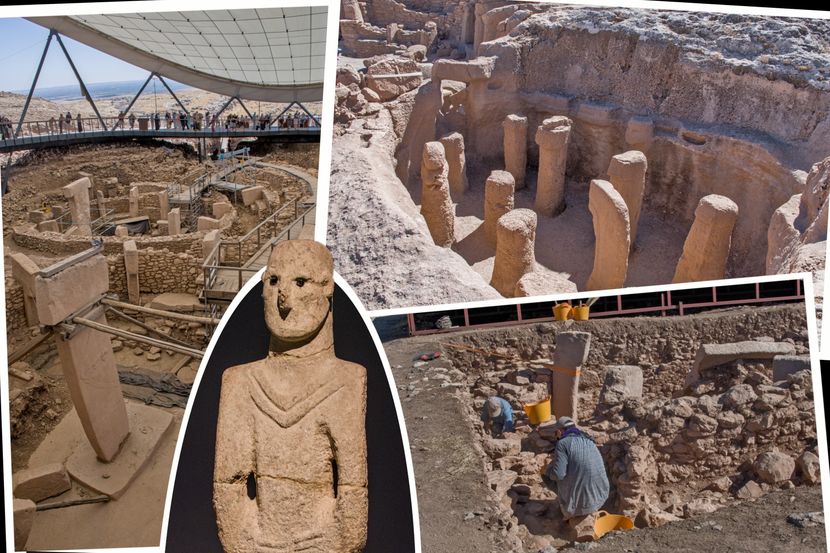
Telegraf reporters visit the true cradle of civilization: The hidden history of the world – Taş Tepeler


Where was civilization born? In Mesopotamia, about 5,000 years ago. That is the common answer. And for good reason: it is the era when writing emerged, when the first countries were formed, and the first empires rose...
Recommended

Ubio ženu, izašao iz kola i overio šuraka, pa nastavio da rešeta ljude: Detalji jezivog zločina na jugu Srbije
"Nikad više neću da koristim air fryer": Nova istraživanja zaista otkrivaju o pripremi hrane u njemu
However, long before that, thousands of years before the first buildings in Sumer and Akkad, monumental structures were being built in the region of modern-day southeastern Türkiye, in Upper Mesopotamia, at sites such as Göbekli Tepe, Karahan Tepe, Sayburç, and others.
The discovery of these archaeological sites, collectively known as Taş Tepeler (the "Stone Hills"), has completely changed our understanding of the Neolithic Revolution, the period when humans transitioned from a hunter-gatherer lifestyle to building permanent settlements and engaging in agriculture. Furthermore, the discovery of megaliths, permanent structures, and incredible sculptures has also changed our understanding of where the true cradle of civilization is.
What the latest archaeological research shows is that the answer to where civilization was born remains the same: in Mesopotamia. But the seed of civilization was formed much earlier than previously believed, nearly 12,000 years ago.
Reporters from Telegraf Nauka visited the mysterious Taş Tepeler and its famous archaeological sites Göbekli Tepe, Karahan Tepe, and Sayburç, which are called zero point of history in Türkiye.
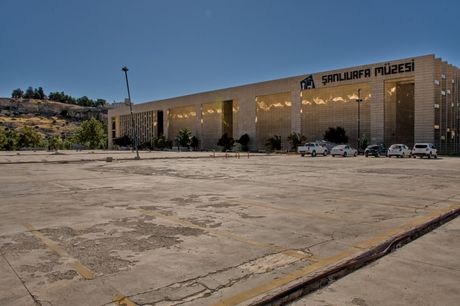
The Urfa Man
The best starting point for exploring Taş Tepeler is the Şanlıurfa Archaeological Museum. This museum in Şanlıurfa (or Urfa) contains many of the exhibits unearthed over the past decades – sculptures of animals and humans, tools, weapons... But there is also a reconstruction of the most famous ring of Göbekli Tepe, which offers visitors the chance to walk through and touch megaliths that are otherwise protected at the site itself, as well as an altar from the Nevali Çori site, which now lies beneath the Euphrates.
The jewel of the museum is undoubtedly the so-called Urfa man or the Balıklıgöl Statue. It is estimated that this statue was created around 9000 BC, and it is considered the oldest known life-sized naturalistic human sculpture.
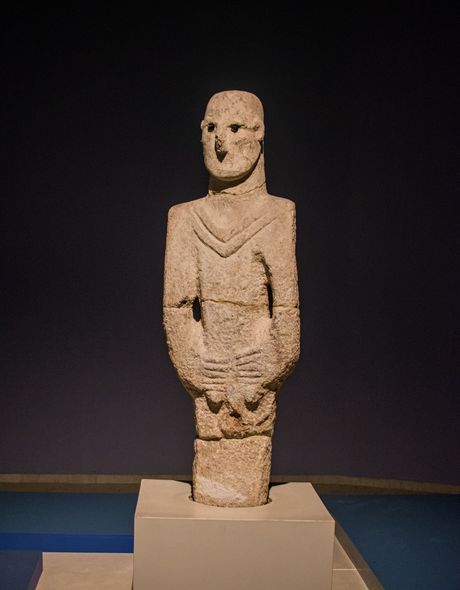
It stands around 180 centimeters tall and is made of limestone. Only the eyes are made of obsidian. Standing before it is an incredible feeling. The author or authors, whoever they were, wanted this figure to command respect, and perhaps even fear.
– The statue was discovered very close to this museum. It resembles the artistic style of Göbekli Tepe, but with a few differences. First, the nose is very visible. The nose on the statue is very large. We don't often see such a large nose at Göbekli Tepe or Karahan Tepe. But when you look at the necklace or the piece of clothing on the chest, it reminds one of Göbekli Tepe. The position of the hands on the front, over the groin, is very much in the style of Göbekli Tepe, but this is a more developed version, a more human version of the statues from that site – our guide explains.
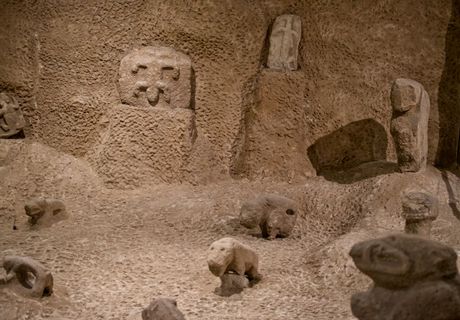
Art from Göbekli Tepe
Urfa also houses many famous sculptures from Göbekli Tepe. There are reliefs of animals, leopard and lion heads, various foxes, pigs, a figure of a vulture... Incredible in their own right, but even more fascinating when you consider they were created nearly 12,000 years ago.
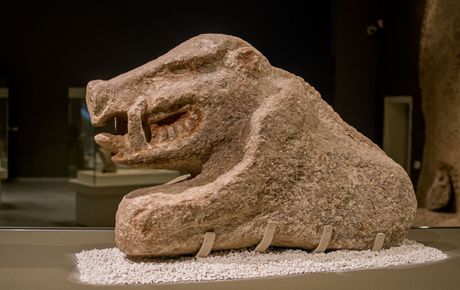
The life-sized boar sculpture is particularly interesting. A fearsome figure with pronounced jaws, it stood in the center of Enclosure D at Göbekli Tepe in prehistoric times, and it still bears traces of pigment. The boar's tongue was painted red, while traces of black and white remain on the rest of its body. The presence of paint on it suggests that other figures, as well as the famous T-shaped pillars, may have been colorful in prehistoric times.
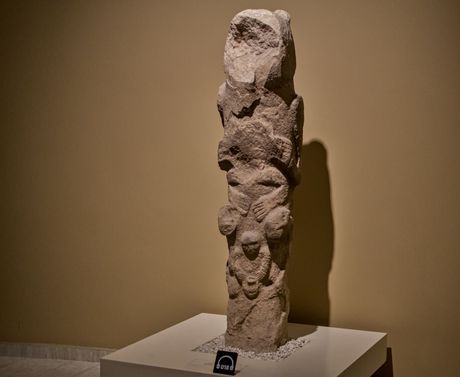
Next to it is an unusual totem from Göbekli Tepe, a sculpture about 192 centimeters tall with exceptional detail visible despite the damage. Nearby are a figure of a man with an erect phallus, human heads, and the only depiction of a woman found at these sites. Just as the animals are depicted with exaggerated characteristics – claws, fangs or beaks – and men with emphasized phalluses, the woman is also presented with exaggerated genitalia, leading experts to believe she is shown either giving birth or engaging in sexual intercourse.
There are also similar sculptures from Karahan Tepe, as well as from other Taş Tepeler sites.
Archaeology and Tourism
Of course, although the museum in Urfa is magnificent and even features reconstructions of the inhabitants of these sites, the best way to feel the spirit of these prehistoric buildings is at the sites themselves. And despite dating from a similar period, they differ significantly in one regard: the number of tourists.
For example, the parking lot at the Göbekli Tepe visitor center is already crowded, and minibuses transport thousands of visitors a day up the hill to the site itself, which is covered for protection. Karahan Tepe also has visitors, but not in such numbers. While we were touring it, we only encountered three others. A third example – Sayburç – is unique because it has not yet been opened to visitors; only archaeologists are there, working continuously to uncover as many secrets of this Neolithic settlement as possible.
Walking through locations built by people nearly 12,000 years ago feels unreal, surreal... All the buildings, structures, and figures seem much larger than they do in pictures. And more spectacular. And I do not believe anyone could stay indifferent to stepping onto any of these sites. The visitors we spoke with agree.
– We have visited so many places in Türkiye, so we decided to come here too. To be in the place where history began, the place of its birth, is beautiful for all of us – said a visitor to Göbekli Tepe from Ankara.
– We came because we wanted to see the beauty of our country and the place where civilization originated. Göbekli Tepe is a beautiful place; I recommend that everyone come – another visitor told us.
At Karahan Tepe, there are significantly fewer visitors, but this place does not leave them indifferent either.
– I have already visited Göbekli Tepe, and Karahan Tepe was discovered after that and excavations began. I was curious. I believe Urfa is one of the most important areas in Türkiye, and I think that researching these structures and engaging in their study is a very valuable path to knowledge – yet another visitor told us.
A Revolutionary Discovery
Göbekli Tepe is located about 18 kilometers northeast of the center of Şanlıurfa and is one of the most significant archaeological sites discovered to date. However, when the first archaeological team arrived there back in 1963, there was no fanfare. Experts simply did not recognize the significance of what they saw, assuming it was a medieval, most likely Byzantine, cemetery.
The turning point came in 1994. German archaeologist Klaus Schmidt noticed the T-shaped pillars, and detailed excavations began the following year. They found additional T-shaped pillars with animal motifs and geometric shapes, as well as sculptures of animals and humans, stone and bone tools, and the remains of plants and animals that the inhabitants consumed.
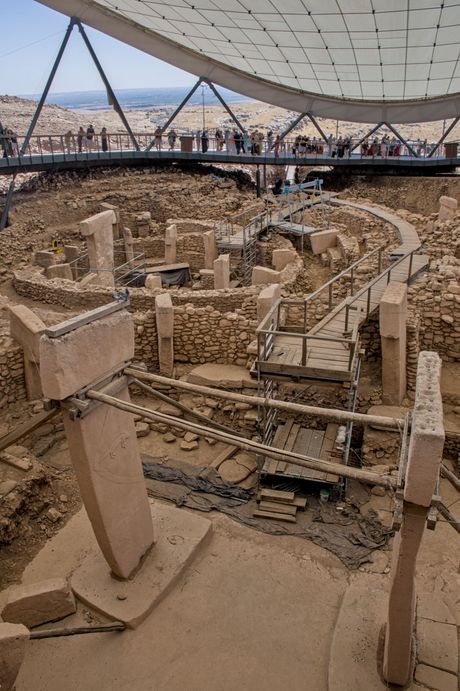
Dating of the discovered monumental structures shocked researchers. When it was determined that they were built around 9500 BC and used until approximately 8000 BC, it seemed completely unbelievable to many. This meant that these megaliths were constructed nearly 7,000 years before the Great Pyramid of Giza in Egypt, about 6,000 years before Stonehenge in Britain and before the invention of the first writing system in Mesopotamia...
And then came a further shock – other similar sites were found in the surrounding area, and they are today collectively called Taş Tepeler. All of this changed the perspective on the emergence of the first societies and intensified debates about the Neolithic Revolution, as well as the question of whether the first permanent settlements arose as a result of the transition to agriculture, or if prehistoric people transitioned to agriculture because they began to build permanent settlements.
First temple or something else?
While it was claimed in the first years after the discovery that Göbekli Tepe was the world's first temple, researchers are more cautious in such claims today.
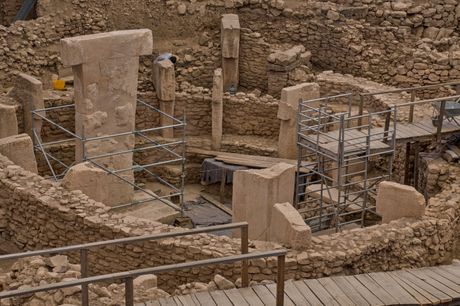
– It was said that the largest buildings were temples, but our results show that is not the case. These are special, communal buildings. They are not houses. Around them are smaller buildings, resembling caves. Small spaces for sleeping or working. The large ones were spaces for people to gather, where they worked on something together. What? We may never be able to find out. Perhaps they did pray; the possibility that it was a temple exists, but we cannot say so with certainty because there is no evidence – Emirhan, an archaeologist at the Göbekli Tepe site, told us.
After Göbekli Tepe attracted great attention from archaeologists, additional research was conducted on the Şanlıurfa plateau, and settlements from a similar period were soon discovered, such as Karahan Tepe, Sayburç, Harbetsuvan Tepesi, Gürkü Tepe, Çakmak Tepe, Medik, Kurttepesi, Taşlı Tepe, Ajanlar, Yoğunburç, and Yeni Mahalle. Research at these sites is conducted as part of the Taş Tepeler project, one of the largest initiatives of the Turkish Ministry of Culture and Tourism.
Other sites, same culture
Stepping into Karahan Tepe, it is very easy to conclude that this site is part of the same culture as Göbekli Tepe, even though it is about 500 years younger. There are the recognizable, enormous T-shaped pillars, circular walls of communal rooms, and similar figures... On one of the pillars, a human face is carved on the side, which for archaeologists served as final proof that these T-pillars represent human figures.
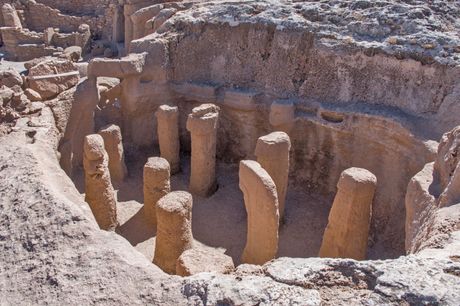
One of the differences between Göbekli Tepe and Karahan Tepe is that the former has more animal figures, while the latter is dominated by human figures.
Along with the spectacular communal rooms in Karahan Tepe, the so-called "Structure AB" attracts special attention. This is a small room carved into the rock featuring 10 phallus-shaped pillars, a human head with a snake's body, as well as a small entrance and exit. Most likely, archaeologists say, it was a room used for some form of initiation. What kind of initiation it was and what its purpose was remain a mystery.
Karahan Tepe contains some of the oldest examples of architectural elements such as stairs, windows, and corners.
The famous anthropomorphic figure of a man sitting and holding his penis with his hands also draws particular attention from visitors. The statue is 2.3 meters tall and has many interesting details, such as something resembling a V-neck collar, carved ribs, and fingers...
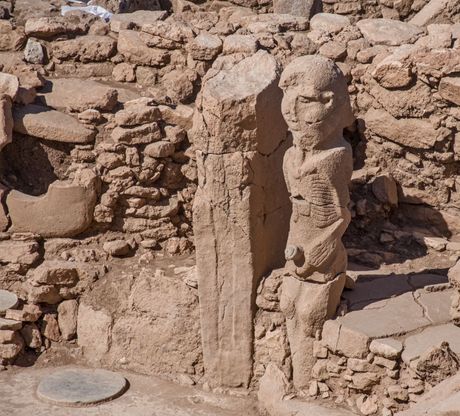
Residential rooms in Sayburç
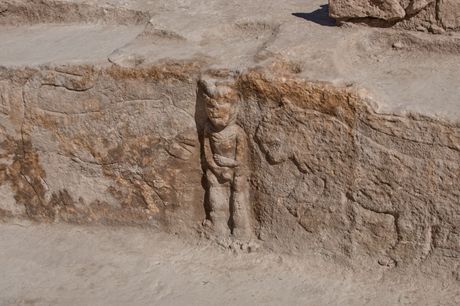
Similar is a relief in Sayburç. It also depicts a man holding his phallus with his hand, but this one is surrounded by leopards.
This site, discovered only in 2020, was inhabited for the shortest time during the Neolithic, only about 300 years, archaeologists say. Nevertheless, at first glance, it is clear that it was built by the same culture. T-shaped pillars are visible on every corner, but here they were not just in the center of communal spaces – they were in the center of residential rooms as well, which is a significant change.
– All the Neolithic research in the region has taught us a lot about the early settlers, about how they settled, how they lived and survived, and how they began to create larger communities than before. We have learned a lot. But the more important and clearer results of the new research indicate that the people who settled did not immediately begin to engage in agriculture. For a long time, they depended on their natural environment, longer than we expected – Eylem Özdoğan, a professor in the Department of Prehistoric Archaeology at Istanbul University who leads the excavations at Sayburç, told Telegraf Nauka.
(Telegraf Nauka)
The trip for Telegraf Nauka reporters to Taş Tepeler was organized by TGA (Türkiye Tourism Promotion and Development Agency) at the invitation of the Turkish Embassy in Belgrade, Office for Culture and Tourism.
news_in_focus
Teslino proročanstvo: Za sada je pogodio sve, a evo šta nas čeka do 2035. godine
Od januara nova pravila za plaćanje poreza
Recept naših baka za lenju pitu: Meri se "na čaše", a ukus vraća u detinjstvo
RIBARI, OKO PODNEVA, VIDELI ČAMAC KAKO PLUTA PO TAMIŠU: Kad su prišli plovilu sledili se od prizora
Đoković odmah eliminisan u Šangaju: Koštala ga titula u Pekingu, Poljak ga uništio servisima!
Video: Posetili smo „najstariju piramidu na svetu“
Telegraf.rs zadržava sva prava nad sadržajem. Za preuzimanje sadržaja pogledajte uputstva na stranici Uslovi korišćenja.
Comments
Web stories

(FOTO, VIDEO) IZGOREO CEO HOTEL NA KOPAONIKU Jezive slike jutro posle požara: Radovi na renoviranju bili pri kraju, a onda je noćas BUKNUO
JELI PLJESKAVICU, PA PAO KRVAVI OBRAČUN! Supruga pozvala muža dok je bila sa drugim muškarcem na Voždovcu: Izbila brutalna tuča, ima povređenih
DEČAK (16) UZEO OČEV PIŠTOLJ, MINUT KASNIJE - UPUCAO SE U VRAT! Otkrivamo detalje drame na Vračaru: Oružje uzeo iz ostave kako bi se POHVALIO DRUGOVIMA!
