This will be first major economic task for Student List: One change could turn Serbia around


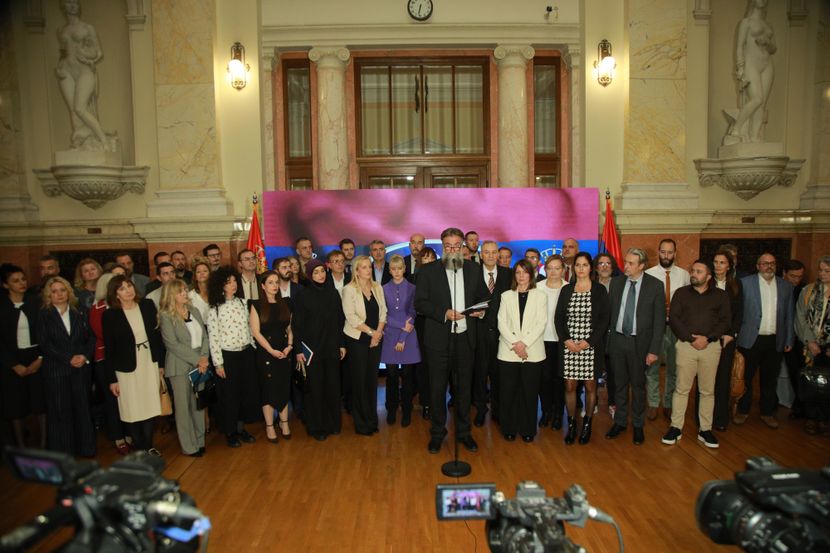
When the Student List officially assumes responsibility for leading the country in terms of forming a government, a serious economic challenge awaits - a change in the model of development of the Serbian economy, which for years relied heavily on foreign investments, state subsidies and relatively cheap labor.
The transition from such a model to an economy based on domestic production, knowledge, innovation and higher productivity could be one of the first and most important economic tasks for the Student List.
Recommended

Vučić: U nedelju sam dobio jasnu i nedvosmislenu poruku da ću biti ubijen
Ovo će biti prvi veliki ekonomski zadatak Studentske liste: Jedna promena mogla bi da preokrene Srbiju
In their program for the economy and finance, the students said that the model of cheap labor has been used up and that Serbia must turn to the creation of better jobs and companies that can be competitive on the European and world markets.
This would imply a significant change in the way the state spends money. The Student List is announcing that every contract signed by the state would be public, that public companies would be run by experts chosen based on their competence, and that state subsidies would be directed towards companies that increase the average wage.
A particularly important part of the program is related to tax policy. Less taxation of labor and lower income is foreseen, with a greater burden on large assets, as well as an increase in the non-taxable part of earnings from 23 to 35 percent of the average salary.
One of the more ambitious ideas is the formation of the Development Bank of Serbia, which would be created by the transformation of the Development Fund and the Export Insurance and Financing Agency. Its role would be to facilitate the financing of domestic companies, investments and projects that can contribute to long-term economic growth.
However, the biggest challenge will not only be passing new laws, but their implementation and securing money for the announced changes.
This is something spoken about by economic experts. An analysis published by Euronews indicates that Serbia still has the problem of insufficient investment by the private sector in research and development. According to the data provided in that analysis, Serbia allocated 0.94 percent of GDP for research and development in 2024, while the average in the European Union was 2.2 percent.
This shows how difficult it will be to achieve the announced transition to the knowledge economy. For such a change, incentives and establishment of new institutions are not enough, but also stable business conditions, greater investments in education and science, as well as a stronger connection between universities and the economy.
According to experts, the first major test for the Student List will be to show how the planned changes can be implemented in practice, how much they will cost and what concrete benefits citizens and domestic companies will enjoy from them.
(Telegraf Biznis)
news_in_focus
Čupić prvi put odgovorio na navode da poseduje 7 stanova
Srpski genije pravio izume za auto-industriju, a završio na birou: Za 27 godina staža nisam dobio otpremninu
NEDELJNI ASTRO VODIČ: Blizanci - Pun Mesec u vašem znaku vodi do pucanja, Device - između otkaza i unapređenja
Četvrtina putnika JAT-a 1964. letela je za Titograd: Manje poznata istorija Jugoslovenskog aerotransporta
Ovo su najvažnije promene koje čekaju Srbiju: Čupić otkrio šta sledi narednih dana
Video: Veče sa nobelovcem u Klubu Privrednik: Kako znanje postaje razvojna snaga ekonomije
Telegraf.rs zadržava sva prava nad sadržajem. Za preuzimanje sadržaja pogledajte uputstva na stranici Uslovi korišćenja.
Comments
Web stories

Pratio bivšu devojku, pa je ubo nožem, građani ga savladali! Detalji drame u garaži tržnog centra u Beogradu: Policija obezbedila jedno vozilo
TEKTONSKI POREMEĆAJ U VRHU EU Kontroverzna Hrvatica postala glavni igrač Brisela: "Ne žele ni da čuju za Kaju Kalas"
Drama na Senjaku: Zapaljen poznati restoran, radnik obezbeđenja sprečio havariju
