Serbian Assembly President Ana Brnabic: EU enlargement process is based on political will, not merit


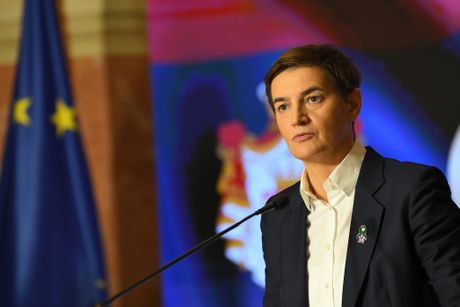
President of the National Assembly of Serbia Ana Brnabic said today that the EU enlargement process is not one based on merit but on political will.
Recommended

Ovo je najbogatija Srpkinja na prostoru bivše Jugoslavije: Njeno bogatstvo procenjuje se na 100 miliona dolara
"Na Kubi sam bila dvojka, a u Srbiji sam DESETKA": Prelepa Kubanka želi baš Srbina za muža, otkrila nam ZAŠTO
Addressing the annual summit of the Friends of Europe organization, "EU-Western Balkans" - Brnabic admitted that she is "confused" about the enlargement process, and wondered what the perspective is.
"Is it a meritocracy or is it just purely about political will? You know, it's absolutely not a process based on merit. That phrase, has almost become an insult to most of us in the Western Balkans because it has nothing to do with the setting of goals. And even when you achieve the goals in terms of implementing reforms - clusters (stages in EU membership negotiations) will not magically open," said Brnabic.
She reiterated that Serbia has met all the conditions to open Cluster 3, which has also been stated in the last few European Commission reports recommending the opening of that cluster - but that nothing is happening.
"We will go into 2026 without clarity about the opening of Cluster 3. It is not likely that it will be opened in December, meaning, by the end of 2025. And we have already had five consecutive EC progress reports recommending to EU members to open Cluster 3, and nothing is happening. So, no, it's not based on merit, but on political will," Brnabic said.
The Serbian National Assembly president also said that she thinks they are probably even more frustrated, confused and disappointed in North Macedonia, because of what they have gone through in terms of solving open issues with Greece, changing the name of the country, and yet they didn't even get a date for the start of negotiations, which sends the wrong signals.
"On the other hand, I must congratulate our partners from Albania. In less than two years, they opened all the clusters. It took Serbia 11 years to open two out of six. So, I am very confused and have no idea as to what this whole integration process is based on, and what actually needs to be done to make progress. It's not based on merit," Brnabic reiterated.
Asked what they say in the EU, and what "means are being used" when talking to EU officials, Brnabic replied that in the last two months she was often in Brussels, that Serbia has an excellent ambassador there and an excellent team that does its best, as does President Aleksandar Vucic, who is regularly in touch with the President of the European Commission with whom he will meet again soon.
"But all that doesn't seem to work. You have countries that are more skeptical. Obviously, in the case of Serbia, it's primarily the Baltic countries. Now we're opening an embassy in Latvia to cover all the Baltic countries, you know, we're working very hard with Germany. I would say that our biggest supporters are definitely France and Italy, but, you know, things are stuck and it seems we can't fix it," said Brnabic.
She clarified that the European Commission itself is "fair and reliable" - having assessed that the cluster (3) can be opened, but that the EC "cannot force EU member states who do not want it, to give approval for the opening of the cluster."
"The opening of the cluster is a problem because all members have to approve it, but the EC cannot force member states to do so," concluded Brnabic.
The "EU-Western Balkans" summit is held every year in December and is attended by representatives of regional countries as well as from the EU.
(Telegraf.rs/Tanjug)
news_in_focus
Tanjir sa vodom i jednim kamenom stavite u dvorište ili na balkon: Evo zašto je to važno baš sada
Mraz usred septembra: Temperatura pala na MINUS 3
Kapiten Srbije zgrožen, otkrio skandaloznu scenu s EP: "Neka zapamte generacije u Srbiji, rekli su da od....m"
Sergej Barbarez "oterao" čuvenog Bosanca iz reprezentacije, zamenio ga Srbin koji je radio u Zvezdi 13 godina
Ova biljka "čisti" pluća pušača i spas je za prehlade: Domaći eliksir možete da napravite za 3 minuta
Video: Sa sto maraka u džepu napustila je dom, tražila decu u izbegličkoj koloni, sad ima ono najvrednije
Telegraf.rs zadržava sva prava nad sadržajem. Za preuzimanje sadržaja pogledajte uputstva na stranici Uslovi korišćenja.
Comments
Web stories

EKSPLODIRALO JE! SVETU PRETI NOVI PAKAO! Huti jurišaju, blizu su Kapije suza, 50.000 ljudi beži pred KRVOPROLIĆEM: Ovo je najcrnji scenario
TEŽAK ŠAMAR ZA KAJU KALAS Htela na svoju ruku da progura plan, pa "popila" VETO: U jeku žestokog rata sa Ursulom, sazvala TAJNI SASTANAK
"Cela Evropa mora da bude spremna na najgore"! STRAVIČNO UPOZORENJE: Evropske granice na meti, stigli OBAVEŠTAJNI PODACI OD CIA
